
Sodium Carboxymethyl Cellulose Formula and Structure
The general formula of sodium carboxymethyl cellulose (sodium CMC) can be written as [C6H7O2(OH)3−x(OCH2COONa)x]n. Here, x is the average degree of substitution (DS), and n is the degree of polymerization. Sodium CMC is a polymer, so a single fixed small-molecule formula does not describe every commercial grade.
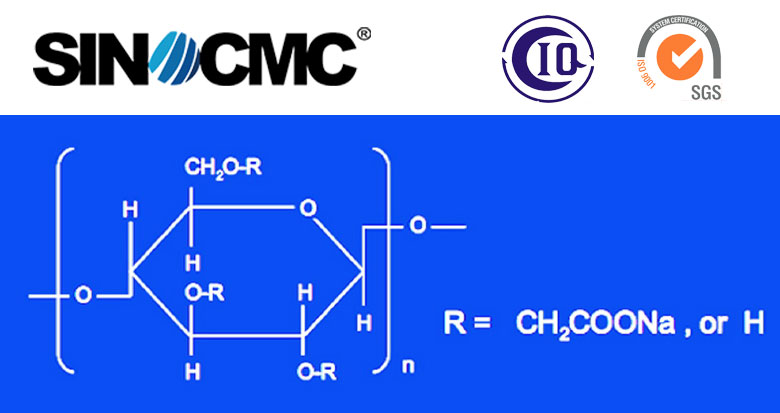
What the sodium CMC structure means
The structure consists of a cellulose backbone carrying carboxymethyl groups in sodium salt form. The –OCH2COONa notation identifies a substituted group. The remaining –OH groups and the substituted groups together account for the three hydroxyl positions available per anhydroglucose unit.
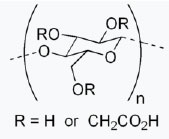
The original structure illustrations are schematic. The general formula above makes the average substitution variable explicit.
Why DS matters in the formula
DS describes the average number of substituted hydroxyl groups per anhydroglucose unit. It is an average across the polymer and can be a non-integer value. Writing [C6H7O2(OH)2OCH2COONa]n corresponds to an average DS of 1; it should not be presented as the universal formula for all sodium CMC.
When reviewing a supplier document, check whether it states a general structure, a nominal DS or a tested DS range. Keep these descriptions separate in the purchasing specification.
Formula, molecular weight and viscosity
The formula identifies the chemical structure, while chain length and substitution describe further aspects of the polymer. A formula by itself does not establish the viscosity of a supplied grade or its suitability for a formulation.
For a useful comparison, request the viscosity test concentration, temperature, instrument, spindle, speed and solution preparation method. Use the same method when testing a replacement sample. Our CMC viscosity comparison guide explains why a universal conversion between 1% and 2% results is unsuitable.
How sodium CMC is produced
At a high level, production involves preparing alkali cellulose, introducing carboxymethyl groups through etherification, and then purifying and drying the product. The agreed grade specification and measured batch results should establish product quality.
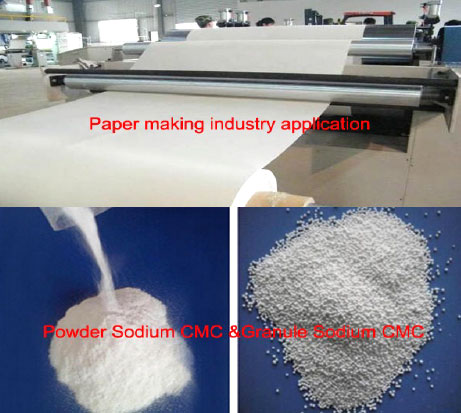
Schematic illustration retained from the original article.
Do not use a fixed count of washing cycles as proof of a particular purity. Ask for the batch certificate of analysis, reporting basis and applicable test methods. For food procurement, use a food grade CMC COA review alongside the requirements for the destination market and intended use.
From chemical structure to a purchasing specification
- Confirm the full chemical name and intended application.
- Specify the DS range and the viscosity measurement method.
- Agree purity, loss on drying and other application-specific acceptance criteria.
- Record particle form, preparation conditions and sample traceability.
- Check the trial results before approving a commercial batch.
Common questions
What does SCMC stand for?
SCMC stands for sodium carboxymethyl cellulose. NaCMC and sodium CMC are also used.
Does the same formula mean the same grade?
No. Two sodium CMC grades can share the general structure yet have different specified viscosity, DS, particle form and quality requirements. Compare the documents and representative samples.
Discuss a sodium CMC requirement
Browse SINOCMC sodium CMC applications or request a grade discussion. Include your application, target viscosity and test method, DS range, documentation needs and expected quantity.
Technical reference
OIV monograph: structure and substitution notation. Its application-specific grade limits concern oenological use; this article uses the general chemistry rather than prescribing those limits for every commercial grade.
SINOCMC Team