
Custom CMC Packaging and Lead Time: A Buyer Checklist
Custom packaging can look like a simple artwork request, but it changes more than the appearance of a CMC bag. The unit weight, inner liner, outer material, closure type, label data, pallet pattern, destination requirements and approval sequence can all affect minimum order quantities, cost and the date when an order is ready to ship.
This guide gives distributors and end-user factories a practical workflow for custom CMC packaging. It is a planning framework, not a promise of a specific format or lead time. Final availability, packaging specification, minimum order quantity, production date and delivery terms must be confirmed for the selected CMC grade, order, destination and approved artwork.
Quick answer: finalize five inputs before asking for a delivery date: the approved product specification, the physical package specification, the exact label or print data, the pallet and loading plan, and the designated people who will approve each item. The reliable lead-time clock starts only when the required commercial and technical inputs are complete.
1. Define the packaging job before choosing the artwork
Begin with how the material will be received and used. A bag for manual dosing into a small mixer has different handling constraints from a larger unit load discharged by mechanical equipment. A food-grade additive project may have different documentation and hygiene expectations from an industrial application. Warehouse racking, forklift capacity, receiving-door dimensions and local waste rules can also limit otherwise attractive options.
Record the approved CMC grade, application, required net weight per unit, expected monthly use, dosing method, storage conditions and destination. If the product is still in evaluation, complete the sample-to-commercial batch approval process before freezing a large quantity of printed packaging. A formulation or grade change after print approval can create obsolete bags, labels or barcodes.
Do not assume that a package used for one grade or route automatically fits another. Bulk density, handling method, pallet geometry, customer specification and transport mode can change the feasible configuration. SINOCMC’s existing packaging information provides examples for discussion; the quotation and approved packaging sheet should control the actual order.
2. Build one controlled packaging requirement sheet
A useful requirement sheet separates facts from preferences and identifies who owns each approval. Avoid distributing requirements across email threads, artwork files and purchase-order notes that can contradict one another.
| Requirement block | Questions to freeze | Typical approval owner |
|---|---|---|
| Product identity | Approved grade, specification, intended use, internal material code and whether food or industrial requirements apply | Quality / technical |
| Primary package | Net weight, inner liner, outer material, closure, dimensions and permitted tolerances | Quality / operations |
| Printed or applied data | Product name, grade, batch or lot field, dates, net weight, origin, storage, handling, language, company details and required marks | Regulatory / quality / brand |
| Identification | Customer SKU, barcode or other data carrier, human-readable code and packaging hierarchy | Master data / warehouse |
| Unitization | Bags per pallet, layers, pallet type, wrap, straps, corner protection, maximum height and gross weight | Logistics / warehouse |
| Delivery basis | Quantity, destination, Incoterm with named place, target window, LCL or FCL assumption and receiving constraints | Procurement / logistics |
Attach version numbers to the requirement sheet and artwork. An approval such as “looks good” is not enough if several files are circulating. Record the filename, revision, date, approver and approved status. If anything changes, issue a new revision and state whether the change affects only artwork or also the physical package.
3. Treat label content as controlled product data
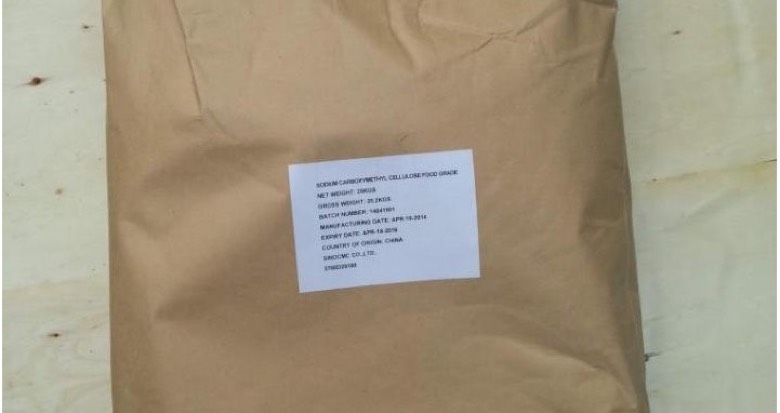
Custom graphics must not obscure the information needed to identify, receive and trace the material. For food-additive applications, the Codex General Standard for the Labelling of Food Additives When Sold as Such addresses product naming, net contents, responsible-party information, country of origin where applicable, lot identification, legibility and language. It is a useful international reference, but destination-country law, customer requirements and the product’s actual regulatory status still need separate review.
A practical label-data check includes the exact product and grade name, net quantity and unit, lot or batch field, manufacturing and expiry or retest information where applicable, storage and handling statements, origin statement, supplier or responsible-party details, and any customer SKU. Do not add food, pharmaceutical, certification, hazard or performance claims simply because they appear on a previous design. Every claim should be supported and applicable to the specific product.
If the buyer uses GS1 identifiers, decide which packaging levels are trade items and which codes will be scanned at receiving. The GS1 Global Traceability Standard distinguishes product identification at packaging levels and batch or lot-level identification. Barcode ownership, assignment and verification remain the responsibility of the appropriate brand owner and trading partners.
4. Choose the least complex format that meets the need
There are usually several levels of customization. A neutral package with an approved applied label may require less setup than a fully pre-printed private-label bag. A standard unit weight may fit established filling and pallet patterns more easily than a new size. A new liner, closure or outer material is a physical packaging development, not merely a design change.
Compare the options on total project impact:
- Neutral packaging with a controlled label: useful when the label can carry the required data and the physical package already fits the product and route.
- Existing branded packaging: may reduce artwork work, but the buyer still needs to confirm grade, label data, market acceptance and traceability.
- Customer-specific printed packaging: can support private-label or local-market presentation, but introduces artwork approval, print setup, material procurement and obsolete-inventory risk.
- New physical packaging specification: may require evaluation of filling, sealing, strength, compatibility, handling, palletization and transport performance before commercial use.
For a first order or uncertain forecast, compare the value of full customization against the small-batch and full-container planning trade-offs. The lowest unit packaging cost is not automatically the lowest-risk decision if unused printed material, excess stock or a forecast change is likely.
5. Use a gated artwork and packaging approval workflow
A controlled approval sequence prevents a late correction from becoming a production delay.
- Requirement freeze: buyer and supplier confirm the product, package, quantity, destination and data fields.
- Artwork draft: the editable source is converted into a production proof with dimensions, colours, print areas and variable-data placeholders.
- Content review: quality, regulatory, brand, warehouse and procurement check only the fields they own.
- Technical prepress review: printer or packaging supplier checks resolution, fonts, colour mode, bleed, barcode quiet zones and manufacturing constraints.
- Final signed approval: one revision is explicitly released for production; earlier versions are withdrawn.
- First-article check: where the risk justifies it, review a printed sample or production photo before the full run. Define in advance what the evidence must show.
A digital proof confirms content and layout, but it may not prove exact colour, print registration, bag dimensions, liner performance or seal quality. Decide whether a physical sample is required based on risk, not habit. Also agree what happens if the buyer changes an approved file: material already purchased or printed may affect cost and timing.
6. Map lead time as a chain of dependencies
“Lead time” is often discussed as one number even though several clocks are involved. Separate the stages so the team can see which date is conditional and which activity is on the critical path.
| Stage | Starts when | Common completion evidence |
|---|---|---|
| Commercial and technical confirmation | Grade, specification, quantity, package concept, destination and delivery basis are complete | Accepted quotation or order plus controlled requirement sheet |
| Artwork development and approval | Exact text, logos, codes and dieline constraints are supplied | Approved, versioned production artwork |
| Packaging-material preparation | Physical specification and final artwork are released | Materials available and accepted for packing |
| CMC production and quality release | Order and approved product specification are confirmed | Released batch and required quality documents |
| Packing and unitization | Released product and packaging materials are available | Completed bags, labels, pallets and packing records |
| Booking and origin handling | Cargo-ready date, volume, weight, term and route are credible | Booking confirmation and cutoff plan |
| Transport, import and receiving | Cargo is handed over under the agreed term | Delivery, receiving inspection and any buyer release |
Some activities can run in parallel; others cannot. Artwork review may progress while the approved grade is being finalized, but printing should not start if a pending grade or claim decision can change the bag. A vessel departure is not the same as warehouse availability: transit, customs, inland transport, receiving inspection and laboratory release may sit after shipment.
When comparing quotations, specify the Incoterm rule and the exact named place. The ICC Incoterms reference shows why the named point matters for delivery, risk and cost allocation. Incoterms do not by themselves define product quality, payment, title transfer, customs data ownership or the complete delivery schedule; those items need separate agreement.
7. Identify the true critical path and add justified buffers
Ask for the earliest and latest credible completion dates for each dependency, then identify the stage with no available float. Common risks include a first-time printed bag, a new material or dimension, several language versions, buyer barcode verification, a physical sample couriered for approval, a late quantity change, limited printer capacity, public holidays, carrier cutoffs and destination-document corrections.
Do not hide uncertainty inside a large unexplained buffer. Record the assumption behind it. For example, “artwork approved by buyer on 3 September” is an actionable gate; “allow two extra weeks” is not. If the approval date slips, re-baseline the cargo-ready and delivery windows instead of continuing to quote the original date.
Build a change-control rule into the purchase order or project record. The rule should state which changes trigger re-quotation, re-approval or a new schedule. This protects both sides from treating a material change—such as a different bag size, market language or pallet pattern—as a minor correction.
8. Confirm the pallet and container plan before printing
Bag dimensions influence bags per layer, pallet height, stretch-wrap stability, container utilization and warehouse handling. Confirm maximum pallet gross weight and height, forklift entry, rack clearance, unloading method and whether bags may extend beyond the pallet. A packaging design that is attractive on screen can still be inefficient or unsafe to unitize.
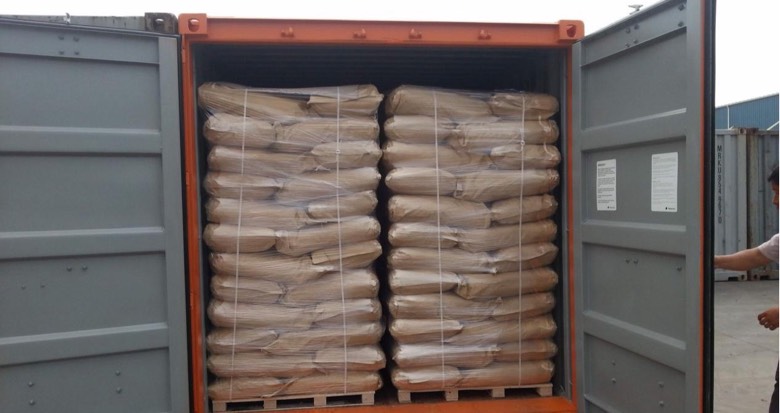
If solid-wood pallets or dunnage move internationally, confirm destination requirements. The International Plant Protection Convention’s ISPM 15 resources explain the phytosanitary framework for regulated wood packaging material and the official mark. Processed-wood and non-wood options may be treated differently; the buyer and logistics parties should verify the applicable rule for the route.
The joint IMO/ILO/UNECE CTU Code provides a non-mandatory global code of practice for packing cargo transport units. Its planning guidance covers suitable CTUs, cargo compatibility, securing and moisture risks. Use it alongside carrier instructions, applicable law and route-specific requirements. For product handling after arrival, review the separate SINOCMC guide to packaging, transportation and storage of CMC.
9. Send a quote request that can produce a reliable schedule
A complete request reduces clarification cycles. Include:
- approved CMC grade, specification and application;
- required quantity and forecast, distinguishing trial, first commercial and repeat demand;
- net weight per bag and proposed package construction;
- neutral, branded, applied-label or customer-printed preference;
- final or draft artwork, language and barcode requirements;
- pallet type, maximum pallet dimensions and receiving constraints;
- destination, Incoterm rule and exact named place;
- target delivery window and any fixed cutoff;
- required pre-production sample or photo evidence;
- document list and named approvers with response time; and
- permission or prohibition for substitutions in material, print method or pallet plan.
Ask the quotation to separate confirmed items, assumptions, exclusions and buyer actions. A date based on missing artwork or an unconfirmed package should be labelled provisional. Once the missing input is approved, request the revised critical-path schedule and cargo-ready basis.
10. A practical approval checklist
- Product grade and specification are approved.
- Unit weight, liner, outer material, closure and tolerances are defined.
- Label text is checked for product truth, traceability, language and market requirements.
- Barcode or customer code ownership and verification are assigned.
- Artwork revision, approver and approval date are recorded.
- MOQ and obsolete printed-material responsibility are understood.
- Pallet dimensions, weight, height and receiving method are compatible.
- Wood-packaging and route requirements are checked where applicable.
- The lead-time clock and each dependency are explicitly defined.
- Incoterm rule, named place, cargo-ready basis and delivery window are stated.
- Change-control and re-approval triggers are agreed.
- Final packaging availability and timing are confirmed in the formal offer.
Frequently asked questions
What information is needed for custom CMC packaging?
Provide the approved grade and specification, application, order quantity, net weight per unit, inner and outer materials, closure, label or print data, language, barcode, pallet limits, destination, delivery term and target window. Name the approvers for technical, regulatory, artwork and logistics decisions.
When does custom CMC packaging lead time start?
There is no universal start point. Define it in the quotation or order. A reliable packaging-material clock normally depends on an approved physical specification and released artwork, while CMC production, booking and delivery may have separate triggers. Dates given before those inputs are complete should be treated as provisional.
Is a printed private-label bag always better than an applied label?
No. A printed bag may support presentation or channel needs, but it adds print setup, approval and obsolete-inventory risk. An approved applied label on a suitable neutral bag can be more flexible for some projects. The correct choice depends on regulatory, traceability, volume, brand and handling requirements.
Can one packaging specification be used for every CMC grade?
It should not be assumed. Grade, bulk density, intended use, package material, unit weight, filling method, pallet plan and route can affect suitability. Confirm the actual configuration for each product and order.
Does artwork approval confirm regulatory compliance?
Not by itself. Graphic approval may only confirm layout or brand appearance. Product truth, mandatory information, claims, language, identifiers and destination requirements need review by the appropriate qualified parties. Applicable local rules override a generic checklist.
How can buyers reduce packaging-related delays?
Use one controlled requirement sheet, assign approvers, supply complete data, version every proof, freeze the physical package before printing, define response deadlines and re-baseline the schedule after changes. Confirm pallet, route and receiving constraints early rather than after the bags are produced.
Plan your CMC packaging before the order clock starts
Contact SINOCMC with your approved CMC grade, application, quantity, preferred unit weight, label or artwork requirements, pallet limits, destination and requested delivery term. We can use those inputs to clarify which packaging and schedule items still require confirmation. Final availability, MOQ, cost and lead time remain subject to the formal quotation and approved order details.
Scope note: This article is general procurement and packaging-planning information. It is not a product specification, legal or regulatory opinion, freight quotation, guarantee of a packaging option, or delivery commitment. Buyers should verify the applicable destination rules, customer standards and contracted terms for each order.