
Small-Batch vs Full-Container CMC Orders: A Buyer Planning Guide
A CMC bulk order should be sized around usable demand, not around the lowest quoted price per kilogram. A small-batch order can protect cash and shorten the cycle time, while a full-container order can reduce handling and freight cost per tonne when demand, storage and quality controls are already stable. The right choice depends on the whole landed-cost and inventory picture.
This guide gives distributors and end-user factories a practical way to compare the two options. It is a planning framework, not a freight quotation: actual minimum quantities, pallet plans, container payloads, lead times and charges must be confirmed for the selected grade, package, route and delivery term.
Small batch or full container: the short answer
| Planning factor | Small-batch CMC order | Full-container CMC order |
|---|---|---|
| Best fit | New application, new market, irregular demand or limited warehouse capacity | Approved grade, repeat demand, stable forecast and adequate storage |
| Cash commitment | Lower initial inventory commitment | Higher working-capital requirement |
| Freight structure | Often LCL, consolidated or multimodal; more handling points may apply | Usually FCL; one sealed container can reduce consolidation handling |
| Unit economics | Higher freight and handling cost per tonne may be acceptable for flexibility | Lower cost per tonne is possible only when the load is well utilized and the stock will be consumed |
| Inventory risk | Lower risk of slow-moving or obsolete stock | Higher exposure to forecast error, storage limits and cash tied up in inventory |
The key principle is simple: do not scale order quantity faster than technical approval and demand evidence. Before moving from trial volumes to routine supply, complete a documented CMC sample approval process and define the specification and test method that every shipment must meet.
1. Start with consumption, not MOQ
Buyers often begin by asking for the CMC MOQ. That is useful, but it is not the first planning number. Start with expected consumption by approved grade and calculate how much stock the business can use before the next replenishment should arrive.
A practical demand plan separates four quantities:
- Base demand: forecast consumption during production.
- Lead-time demand: expected usage from purchase order to warehouse receipt.
- Safety stock: a justified buffer for forecast error, shipping variation and receiving release.
- Existing usable stock: released inventory that matches the approved grade and remaining storage window.
Planned order quantity = lead-time demand + safety stock − usable inventory − confirmed inbound stock.
For distributors, calculate this by SKU and market rather than pooling unlike CMC grades. A high-viscosity food grade, a detergent grade and an industrial grade may all be called CMC, but they are not interchangeable inventory. A combined purchase is not efficient if part of the container becomes slow-moving stock.
2. Compare landed cost per usable tonne
The supplier’s product price is only one line in the decision. Build both quotations to the same delivery scope and calculate the cost of inventory that can actually be released and consumed.
Landed cost per usable tonne should consider:
- product value and any quantity-based price difference;
- export packing, palletization and origin handling;
- international freight, fuel and route surcharges;
- LCL consolidation/deconsolidation or FCL terminal charges;
- cargo insurance where applicable;
- customs brokerage, duty, tax and inspection costs;
- destination handling, demurrage/detention exposure and inland delivery;
- warehouse receiving, sampling, testing and put-away;
- financing cost for cash tied up during transit and storage; and
- expected loss from damaged, delayed, unreleased or obsolete inventory.
Normalize the comparison to the same Incoterms® rule, named place and version. The International Chamber of Commerce explains that Incoterms® rules allocate buyer and seller tasks, costs and risks. A quotation marked only “FOB” or “CIF” without a named port/place and “Incoterms® 2020” is not precise enough for a reliable comparison.
Also separate purchase cost from cash-flow timing. A full-container quotation may have a lower nominal cost per tonne but a worse return if the buyer prepays months of stock, pays extra warehouse costs or discounts slow-moving inventory later.
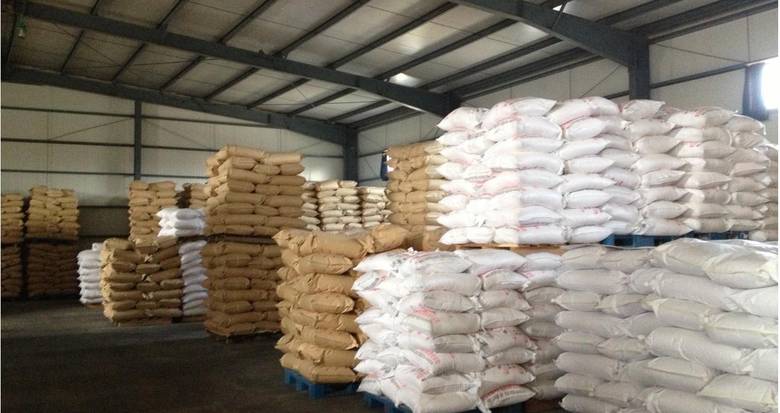
3. When a small-batch CMC order is the better decision
A small order is not automatically uneconomic. It may be the lower-risk option when the value of flexibility exceeds the extra freight and handling cost.
Choose a smaller quantity when:
- the formulation, supplier, grade or production line is newly approved;
- the first commercial demand forecast has a wide error range;
- the buyer is entering a new country or serving a new downstream customer;
- several grades are being evaluated and one SKU should not dominate inventory;
- warehouse space, humidity control or pallet positions are constrained;
- cash preservation matters more than the lowest theoretical cost per tonne;
- the planned volume can be consolidated with compatible, well-protected cargo; or
- a short cycle is more valuable than maximum container utilization.
However, LCL and consolidated cargo can pass through more handling points. Ask how the bags or pallets will be protected, whether the cargo will be opened or reworked at a consolidation warehouse, and how moisture, puncture and contamination risks are controlled. Do not assume that small batch automatically means faster delivery; sailing frequency, consolidation cutoffs and destination unpacking can change total lead time.
4. When a full-container CMC order becomes rational
FCL becomes attractive when the grade is approved, demand is repeatable and the buyer can use the inventory within its planned storage window. The advantage comes from a coordinated load and replenishment plan—not simply from ordering more.
FCL is more defensible when:
- monthly consumption is stable enough to support a realistic depletion schedule;
- the same approved SKU or compatible SKU mix can use container space efficiently;
- the warehouse can receive, inspect, segregate and store the load correctly;
- the business can fund the order without harming other procurement priorities;
- the destination has predictable customs and inland delivery capacity;
- the buyer has defined reorder triggers before stock approaches the safety level; and
- the expected freight/handling saving is larger than the financing and inventory-risk premium.
FCL also creates execution responsibilities. The load plan must respect the specific container’s markings, route restrictions, axle limits, package strength and cargo-securing needs. The IMO’s SOLAS VGM guidance states that verified gross mass is required and is a condition for loading a packed container. Buyers and sellers should agree early who is the contractual shipper, who supplies the VGM, which method is used and when the carrier’s cutoff applies.

5. Do not use a universal “tonnes per container” assumption
The limiting factor may be weight, volume, pallet geometry, packaging format, door clearance, load distribution, route rules or the specific equipment supplied by the carrier. A loose-loaded bag plan can differ from a palletized plan; 25 kg bags can differ from larger unit loads; and two products with the same net mass can occupy different volumes.
Request a shipment-specific packing proposal with:
- bag type and nominal net weight;
- bags per pallet or unit load;
- number of pallets or units;
- total net product weight;
- estimated gross packed weight, including pallets and securing materials;
- estimated cubic volume and loading pattern;
- container type and its actual tare/payload markings;
- blocking, bracing, lashing and moisture-protection plan; and
- photos or a loading record when appropriate and permitted.
SINOCMC’s existing packaging information provides examples of bags, pallets and container loading. Treat those as examples to discuss, not as a universal promise for every grade, route or order.
6. Build moisture and handling risk into the choice
CMC should be protected from moisture and package damage through transport and storage. A larger order increases the duration and volume of inventory exposed to warehouse conditions, while a consolidated shipment can introduce additional handling and co-loading exposure.
The IMO/ILO/UNECE CTU Code is a useful reference for packing cargo transport units. Its guidance addresses clean, suitable CTUs; compatible cargo; secure stowage; moisture-sensitive cargo; dry packing materials; and the need to calculate drying-agent capacity rather than adding desiccants by guesswork.
For each option, confirm:
- bags and inner liners appropriate to the agreed product and route;
- pallet condition, load stability and protection from puncture;
- container cleanliness, dryness and structural condition before loading;
- segregation from wet, leaking, odorous or incompatible cargo;
- warehouse temperature/humidity controls and stock rotation;
- receiving inspection and quarantine space; and
- the action plan for damaged or water-affected packages.
For additional handling context, review packaging, transportation and storage of CMC. Apply destination rules and your own quality system rather than relying on a generic checklist alone.
7. Use coverage days and cash conversion—not instinct
Two simple measures prevent many over-ordering decisions:
- Inventory coverage = usable inventory ÷ average daily consumption.
- Incremental cash tied up = additional quantity × landed cost per unit.
Then compare coverage with total replenishment time: supplier preparation, booking, origin handling, transit, customs, inland delivery, receiving and laboratory release. If an FCL purchase creates far more coverage than lead time plus justified safety stock, the apparent saving may be buying idle inventory.
Consider a hypothetical factory using 4 tonnes per month. If total replenishment and release time is 10 weeks and the approved safety stock is 4 tonnes, the planning need is roughly lead-time demand plus that buffer, less usable and confirmed inbound stock. If a proposed container quantity materially exceeds that need, the buyer should quantify financing, storage and forecast risks before accepting a lower unit price. This example illustrates the method only; it is not a recommended stock level.
8. A practical CMC order decision scorecard
- Technical readiness: Is the exact grade approved at the intended production scale?
- Demand confidence: How wide is the forecast range for the next replenishment cycle?
- Landed economics: Are all origin, freight, destination and financing costs included?
- Inventory exposure: How many months of usable stock will arrive?
- Warehouse readiness: Are pallet positions, quarantine area and environmental controls available?
- Logistics execution: Are Incoterm, route, equipment, VGM, consolidation and delivery responsibilities clear?
- Downside recovery: What happens if demand is delayed, packages are damaged or the lot requires investigation?
If small batch wins on learning, cash and inventory risk, do not let a lower FCL unit price override the evidence. If FCL wins on stable demand, complete landed cost and operational readiness, document the assumptions and set the next reorder trigger before the shipment leaves.
9. Information to include in a quotation request
- application and destination market;
- approved grade/specification and required test method;
- estimated monthly or annual demand;
- trial quantity, first commercial quantity and repeat-order scenario;
- preferred bag, liner, palletization or non-palletized requirement;
- destination port/place and delivery deadline;
- requested Incoterms® rule, named place and version;
- whether LCL and FCL alternatives should both be quoted;
- required COA, SDS, origin or other legitimate shipment documents; and
- warehouse or unloading constraints that affect pallet and truck planning.
Also complete a broader supplier qualification review and check the relevant CMC product information. Quantity planning cannot compensate for an unclear specification or unapproved source.
Frequently asked questions
Is a full-container CMC order always cheaper per kilogram?
No. Product and ocean-freight cost per tonne may be lower, but the buyer must add destination charges, inland delivery, financing, warehouse cost and the risk of slow-moving or unusable stock. Compare landed cost per usable tonne under the same delivery scope.
When is a small-batch CMC order the safer choice?
It is often safer during a new product launch, first commercial run, uncertain forecast, new market entry or warehouse constraint. The extra logistics cost can function as the price of flexibility and faster learning.
How should buyers compare CMC LCL vs FCL quotations?
Use the same Incoterm, named place, destination, packaging and delivery window. Include consolidation/deconsolidation, handling, storage, customs, inland delivery, insurance, lead time and damage exposure—not only line-haul freight.
What information is needed to confirm a CMC MOQ?
The supplier needs the grade, specification, application, packaging, palletization, destination, delivery term and whether the request is for a trial, first commercial order or repeat supply. MOQ can change with those variables, so it should be confirmed for the specific quotation.
How much safety stock should a CMC buyer hold?
There is no universal number. Base it on demand variability, total replenishment and release time, supply reliability, service-level target, storage limits and the consequence of a production stoppage. Review the assumption as real consumption data accumulates.
Can different approved CMC grades share one container?
Potentially, if the supplier, carrier and buyer confirm compatibility, package identification, segregation, load distribution and documentation. Do not combine SKUs only to fill space if it creates traceability, inventory or unloading problems.
Plan the quantity before requesting the final quote
A good CMC bulk order balances supply continuity with cash, freight, quality and inventory risk. Prepare two comparable scenarios—small batch and FCL—with the same specification, destination and delivery scope. Then choose the option that creates the lowest total operational risk at an acceptable landed cost.
For a project-specific discussion, contact SINOCMC with your application, approved specification, forecast consumption, destination, preferred packaging and requested delivery term. Those inputs help clarify which quotation details still need confirmation; final availability, quantity, lead time and logistics terms remain subject to the formal offer.