
CMC in Lithium Ion Batteries: Anode Binder and Slurry Selection
Sodium carboxymethyl cellulose (CMC) is used in aqueous lithium ion battery anode formulations as part of the binder and slurry-processing system, often alongside styrene-butadiene rubber (SBR). Select a candidate against the complete formulation and process. A grade described as battery grade does not, by itself, guarantee better capacity, cycle life or adhesion.
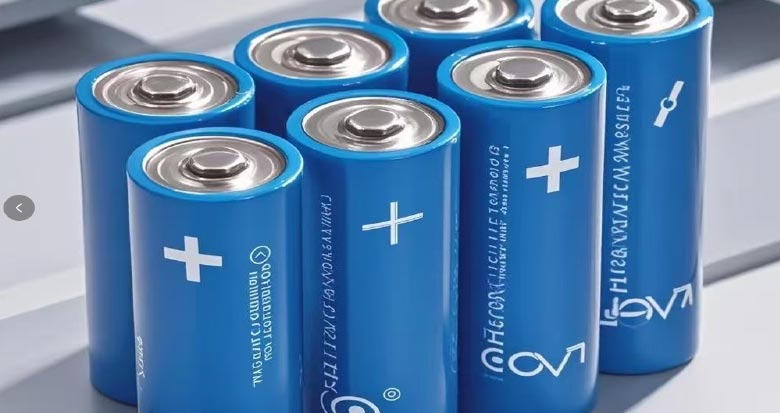
What CMC does in an aqueous anode slurry
Research on graphite anode formulations has examined how CMC concentration, molecular weight and DS influence particle dispersion and slurry flow. These variables should be considered together with the active material, conductive additive, solids content and preparation conditions. This article focuses on anode processing; findings should not be transferred automatically to every cathode or electrode chemistry.
Keep the CMC solution measurement separate from the complete slurry measurement. A supplier’s solution viscosity is useful for comparing a defined specification, but it does not establish coating behavior at the actual slurry solids content.
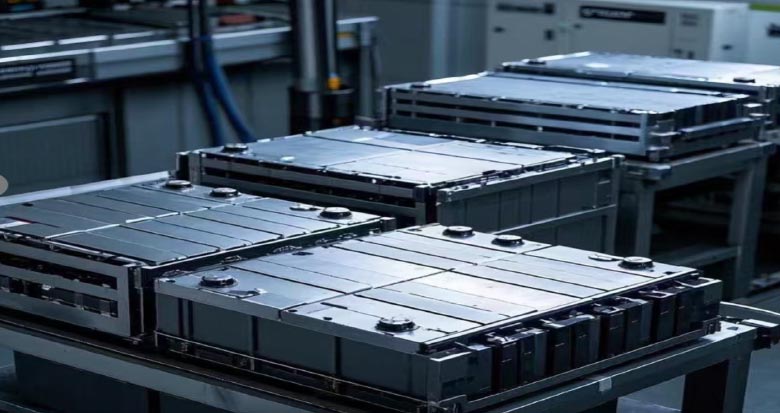
Distinguish cohesion from adhesion
Cohesion describes strength within the electrode layer; adhesion describes its attachment to the current collector. They are separate evaluation targets. In a published graphite-anode study, CMC affected dispersion and layer cohesion, while SBR supplied the practical adhesion to the collector in the formulations tested. This is evidence from a defined system, not a universal statement that every formulation behaves identically.
For the intended CMC/SBR system, evaluate slurry behavior, coating integrity and adhesion with the actual materials and process. Do not equate a binder’s presence with a guaranteed improvement in peel strength or cell performance.
What to specify when comparing CMC candidates
- Application and formulation: identify the anode active material, conductive additive, SBR or other co-binder, and the intended process stage.
- Viscosity method: state solution concentration, temperature, instrument, spindle or geometry, speed and hydration procedure. See the CMC viscosity comparison guide.
- DS and grade identity: agree the range, method and lot traceability. Do not rank candidates by DS alone.
- Quality requirements: request the agreed impurity, moisture and other application-specific limits and supporting batch results. Do not assume that a generic purity claim covers the battery process requirement.
- Particle form and preparation: record addition sequence, mixing conditions, hydration endpoint and any filtration requirements. Use the CMC preparation checklist to document make-up conditions.
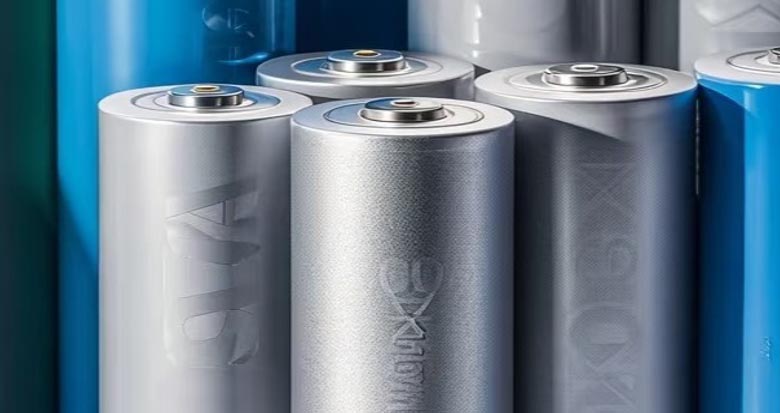
A staged trial before commercial approval
- Define a reference: document the established formulation and measurable processing, coating and cell-performance targets.
- Prepare consistently: compare candidates under matched water quality, concentrations, mixing history and hydration conditions. State whether additions are based on slurry mass or dry electrode solids.
- Evaluate the slurry: assess relevant rheology, dispersion, storage behavior and compatibility with the full binder system.
- Evaluate the coating: compare coatability, drying behavior, layer integrity and adhesion under the intended process conditions.
- Qualify the electrode and cell: use the customer’s validated protocols to evaluate electrochemical performance before approving a material change.
- Confirm supply: repeat the result, review lot documents and agree acceptance criteria for commercial batches.
This proposed workflow does not prescribe a universal dosage or mixing recipe. Use a documented sample to commercial batch approval workflow and CMC receiving checklist to connect sample results with purchasing decisions.
Common selection questions
Is the highest viscosity CMC the best battery binder?
Not automatically. Compare the specified solution method and test the complete slurry, coating and electrode. Select against the measured process requirements.
Can a graphite result be used directly for a silicon-containing anode?
Do not assume the same outcome. Qualify the candidate with the intended active material and the customer’s electrode and cell evaluation protocols.
Discuss a battery CMC evaluation
Contact SINOCMC about a candidate CMC specification. Include the active material, binder system, solids content, viscosity method, quality limits, mixing and coating process, current problem, sample requirement and expected quantity. Agree candidate availability and supporting documents before a trial; application suitability remains subject to qualification.
Research reference
Gordon, Orias and Willenbacher (2020): Effect of carboxymethyl cellulose on the flow behavior of lithium-ion battery anode slurries and the electrical as well as mechanical properties of corresponding dry layers. This study uses defined graphite formulations and distinguishes slurry behavior, cohesion and adhesion. It is not a performance guarantee for SINOCMC materials.
SINOCMC Team